It has been a while since I last wrote something on my blog. However, as my new album ‘Here Comes The Robots’ is about to be released in the coming months I’d like to write about my musical experiences and influences that have presented themselves over the years. And those new to The John Irvine Band might find it interesting to hear about my rather eclectic path through a career in music, and certainly it will be good for me to find out where I am with things at the moment.
So. Let me see… where to begin?
How about the mid 70s living in a small town in Southern Ontario?
As a young lad, growing up in Canada in the 70s, much of the music I was exposed to came from the AM/FM radio channels out of nearby Buffalo or Toronto. It was mainly AOR (Boston, Foreigner, Fleetwood Mac), soft rock (Eagles, James Taylor, Andrew Gold) and soul/disco (Bee Gees, EWF, AWB). Not much else. My old man used to play some Joni Mitchell (Blue) and some Gordon Lightfoot (Sit Down Young Stranger) and the first self-titled album by The Band – but my personal ‘bedroom listening’ consisted mainly of Rush, Kiss, Cheap Trick, Queen, Peter Frampton, Aerosmith, Angel etc. essentially the stuff that was featured on the cover of Circus magazine every week! That was the music I was mainly attracted to at the age of 12.
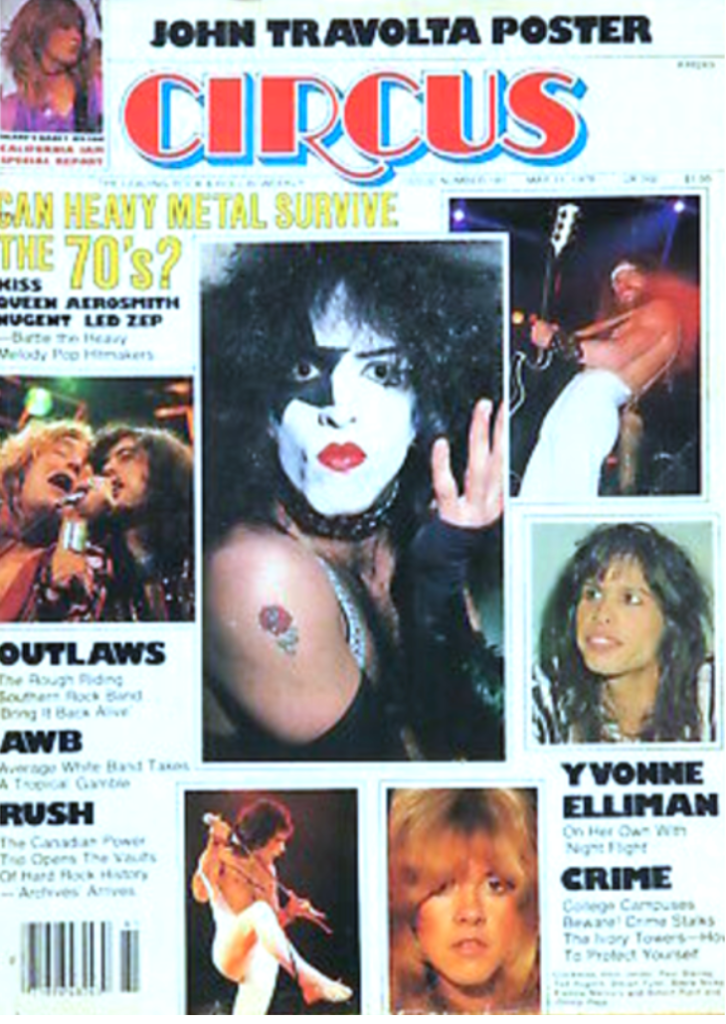
I can remember I had the Rush Archives double cassette, all the early KISS albums (taped off of a neighbour’s LPs), Cheap Trick’s Heaven Tonight, Queen’s News Of The World, Frampton’s I’m In You, Angel’s White Hot… I even had the OST to Rocky by Bill Conti! All well and good. And, looking back now, there was some very fine music being produced at that time – in all of those genres above. And then, in 1979 – the year my family left North America to return to the UK – New Wave arrived on our shores in the guise of The Police, Elvis Costello, Joe Jackson and The Cars.
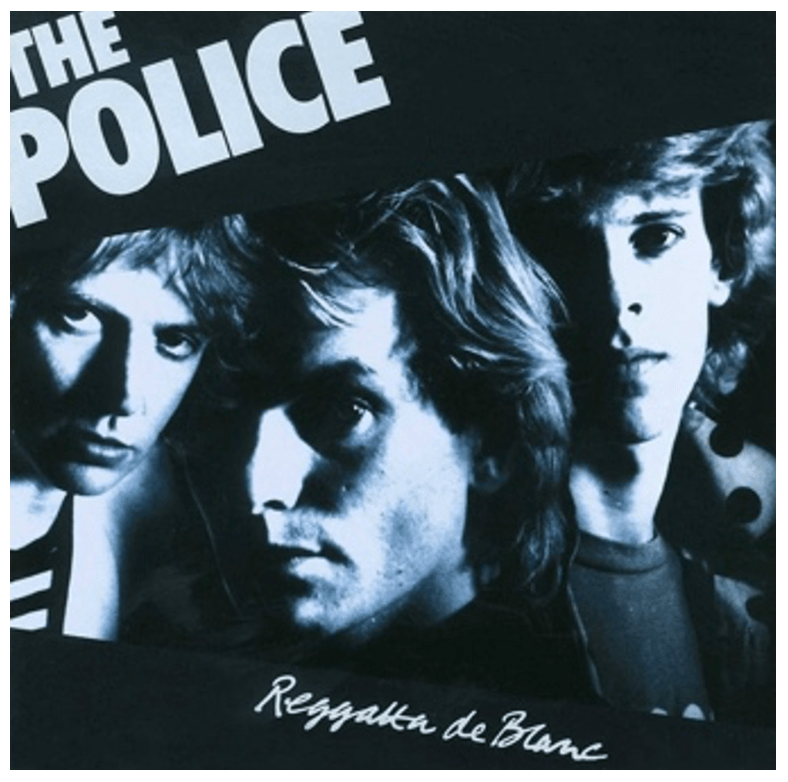
I absolutely loved this distillation of punk and rock. You see, punk was never played on North American radio stations. I knew about it, having visited my relatives in Scotland for much of my life (two weeks in Banchory and Aberdeen every summer) and seen it on Top of the Pops, but didn’t much like it. Having being raised on melodically strong music that sometimes had a good smattering of jazz harmony, punk was a bit of a let down. It was boring and uninspired musically. And whatever The Bromley Contigent were into or rebelling against, it wasn’t remotely connected to my life thousands of miles away in Fonthill, Ont. – but New Wave was different. It was attractive music, harmonically interesting and made me feel like learning how to play a musical instrument, if only to be able to play the opening riff to Message In A Bottle!
And so it was that I came to start learning the guitar.
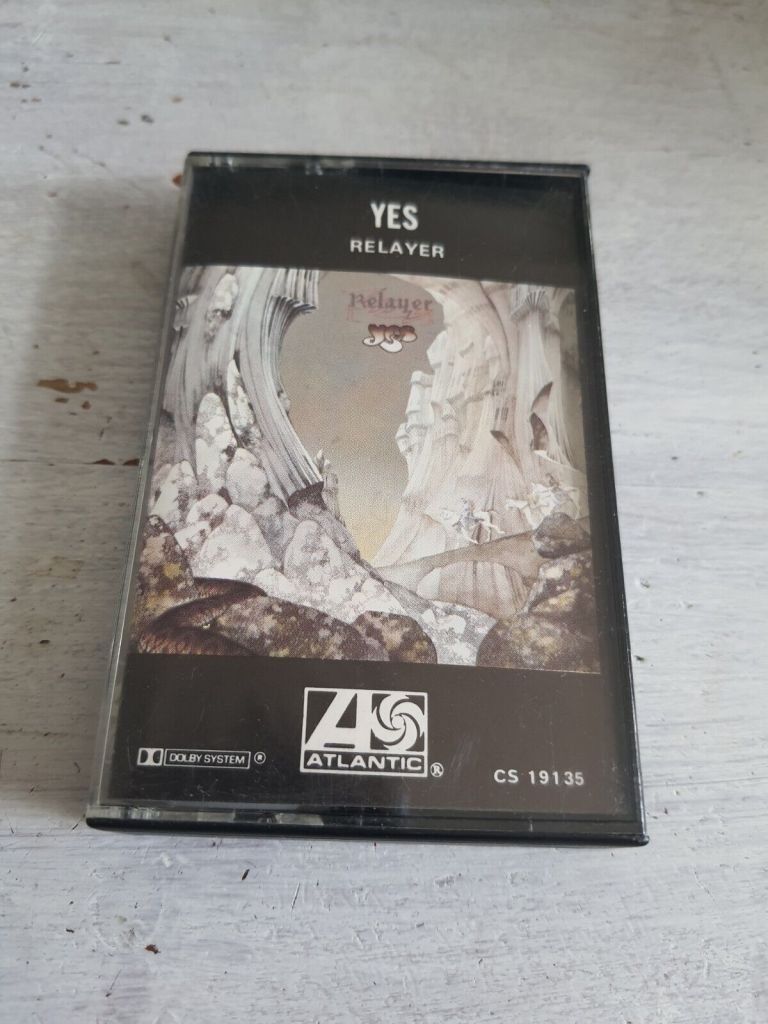
But it wasn’t just New Wave that had hit me with it’s rhythm stick, it was also progressive rock. I recall having to take Grade 10 Math for a few months (before we headed to England because of my Dad’s work) in a futile attempt to catch up with the UK education system. However, in this class were some guys who were into prog rock and suchlike and had noticed that I was wearing a Cheap Trick T-shirt. One of them said: “Woah, Rick Nielsen, he’s a really great guitarist, eh, John?” The sarcasm was making a puddle on the floor. I knew what they were talking about though, Rick was no wizard of the fretboard (but he was a great songwriter). My friend carried on: “You need to listen to some Yes, buddy. Steve Howe, man! You can get Relayer on cassette in the school library, check it out.”
I did.
And it blew my 14 year old mind.
I got a Hohner acoustic in late ’79 just before we moved – as a softner for having to leave all my friends behind in Canada. Then, in 1980 I got a cheap classical guitar so I could go to lessons at the Spanish Guitar Centre in Plymouth, studying with Dave Bowler who had had lessons with John Williams’s dad at the Devon Monkey Sanctaury! I practiced a lot, to the detriment of my school work, but managed to get to Grade 8 in a few years, and despite my grades at school heading the opposite way, eventually managed to secure a place on the Preparatory Course at Dartington College of Arts in Totnes, Devon to redo my A level Music.
(Interlude 1)
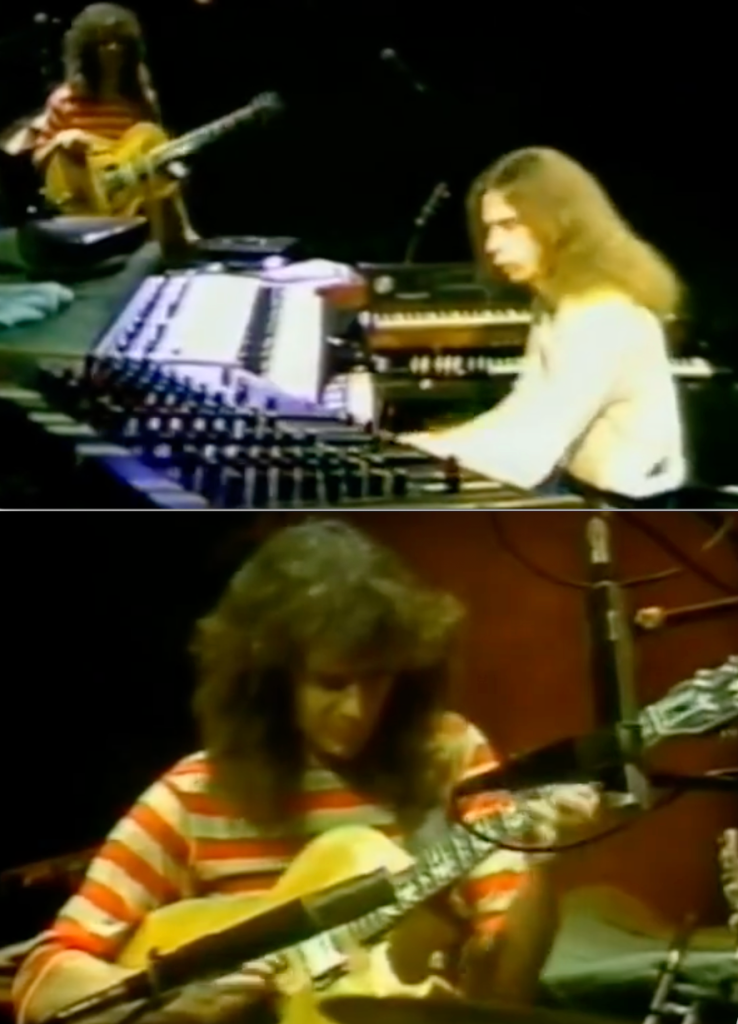
Around this time I recall seeing The Pat Metheny Group on TV – it was the famous Montreal Jazz Festival 1982 show. I knew my life had changed at that moment… I immediately went out and bought the ‘American Garage’ LP, bravely passing the punks sitting outside the local Virgin store sneering at everyone who hadn’t bought ‘Penis Envy’ by Crass.
Dartington was a very ‘contemporary’ college, teaching across all disciplines – art, drama, music, dance – and has since gone the way of a lot of the more progressive arts schools in the UK. i.e. disappeared. However, it was kinda-sorta absorbed into Falmouth University in 2010 after the Dartington trustees called time on the rent. Such a shame. It was the best education I ever had…
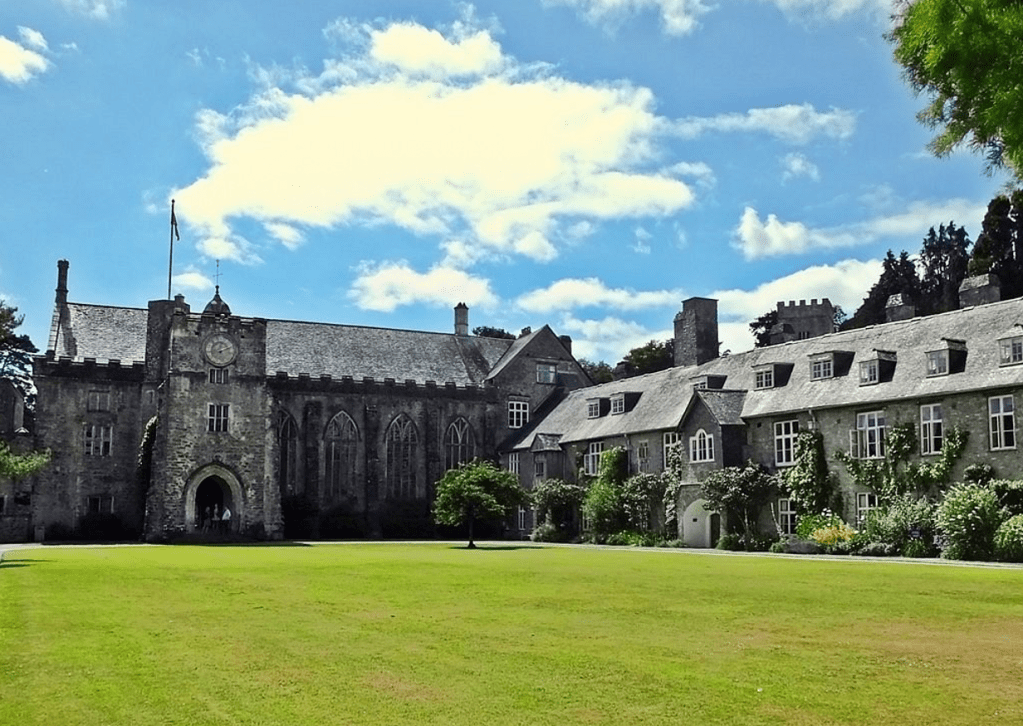
In those hallowed halls beside the River Dart I was taught A-Level history by the avant garde composer Frank Denyer. I saw Segovia in concert in The Great Hall. I attended concerts by Andrew Parrot, Anthony Rooley & Emma Kirkby, the Cornelius Cardew Scratch Orchestra (with Evan Parker, Keith Tippett, Rohan De Saram & Keith Rowe). Heard the shakuhachi player Yoshikazu Iwamoto and the great sitarist Amarnath Mishra. There was jazz fusion in the student bar, improvisation classes, and Morris dancing in the gardens (!). I also had a few jazz guitar lessons with Soft Machine’s John Etheridge. Magick. And John Renbourn (who was doing his MA there at the same time I was on the Prep Course) very kindly gave me a lift up the mile long college drive is his 2CV. Happy days!
I should say that at this time I was very much immersed in the classical guitar and its surrounding culture in the UK. I attended various summer schools and masterclasses with the likes of Chris Kilvington, Vladimir Mikulka, Gordon Crosskey, Chris Susans, David Russell, Gerald Garcia, John Mills, Jukka Savijoki, Paul Gregory. Names, that some of you may recall, from the dim and distant past.
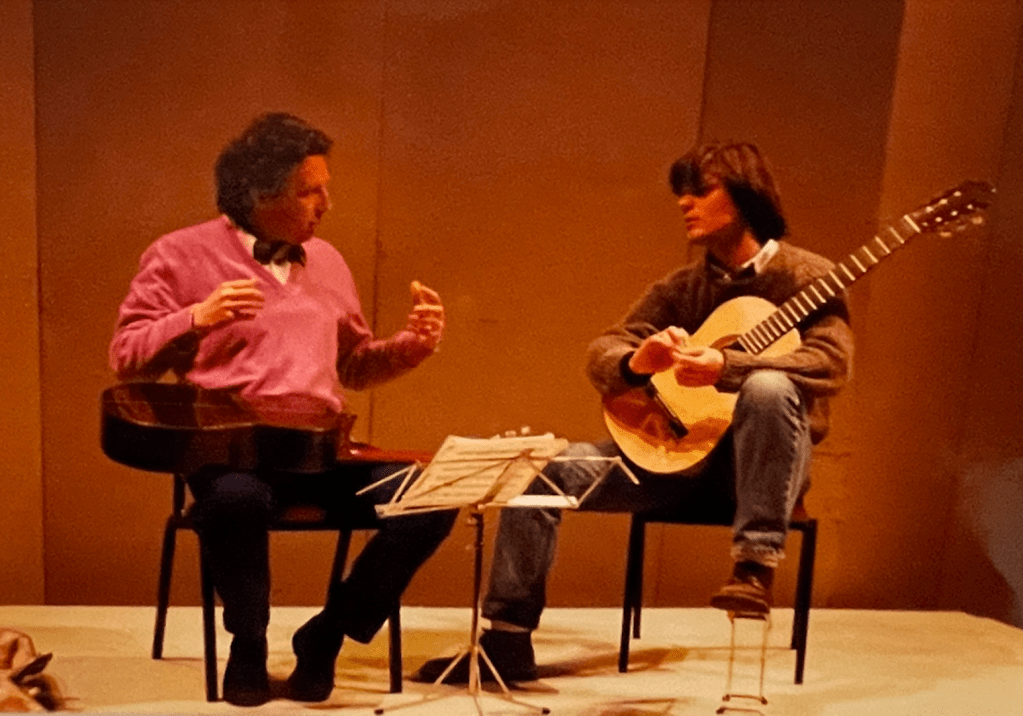
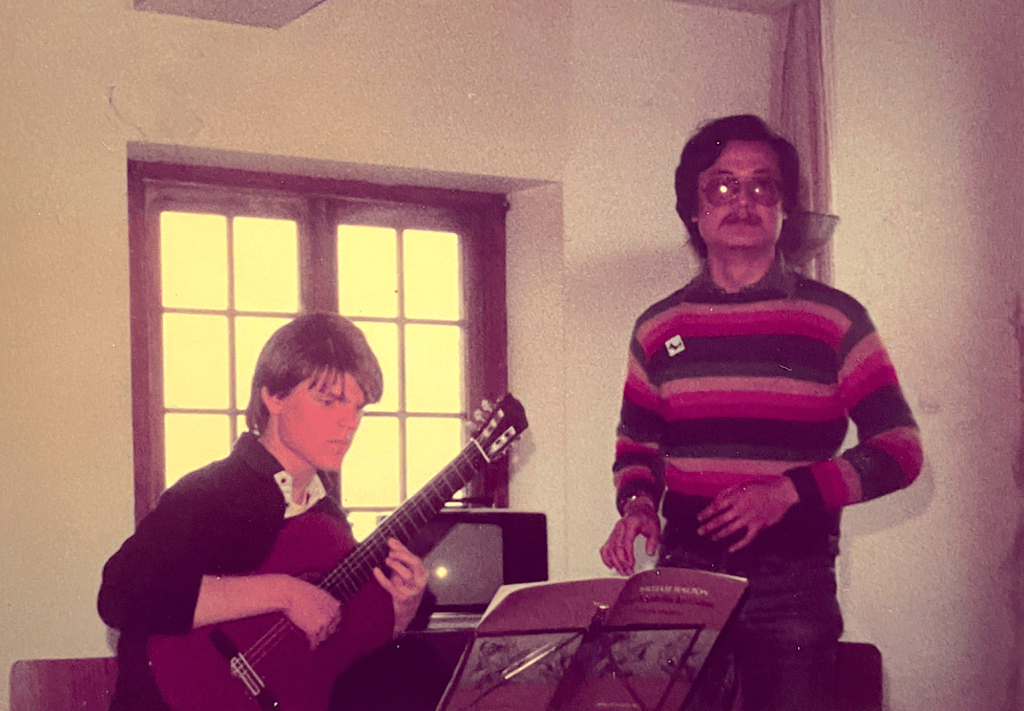
So, I spent a couple years at Dartington, before moving on to study with Phillip Thorne at the Royal Scottish Academy of Music & Drama (now the Royal Conservatoire of Scotland) in Glasgow.
Phil Thorne is one of the greats. I can still remember going up to Edinburgh early in 1986 for a lesson with him before I auditioned at the RSAMD that spring. Phil picked me up at Waverley station and we drove down to his place in Penicuik. I recall I was going to play Scarlatti’s Sonata in E major, K.380 for my upcoming audition, a piece that used a lot of right-hand trills that I had yet to perfect. I began the opening dotted motive and fluffed a few of the trills. Phil let me struggle on for a bit, then he kindly stopped me and said: “Yes, that’s great, John. But maybe let’s not play this one when you come up to Glasgow? Why don’t you play something a bit easier instead, say the Villa Lobos Etude No.8?” I nodded, somewhat relieved. And I shall always be grateful for that advice because that’s exactly what I did. I got into the Academy and spent the next 4 years studying with Phil, during which I won the Guitar Challenge in 1988. To this day I’m still not sure how that happened as I certainly wasn’t the best guitarist at the college. But I’ll take the win!
Then, in 1991, I spent a week studying with the great Finnish guitarist Jukka Savijoki in Helsinki. This was more of a tester really, to see whether I was committed to the classical guitar as a future career – teaching, performing; whether I was going to dedicate myself to the instrument for the forseeable. Because, as much as I liked some of the music in the repertoire, I was never fully enamoured with the ‘picture-postcard-Spanishness’ of it all. And I really didn’t like the sound of the 19th Century (I still don’t) – which was a large part of the repertoire. I was only interested in the ‘modern’ repertoire that was available at that time – Leo Brouwer, Lennox Berkeley, Abel Carlevaro, Reginald Smith-Brindle, Gilbert Biberian, etc. Curiously, I also never listened to classical guitar albums like other guitarists did. I guess I was simply not that interested in it. So, shortly after my time with Jukka, I decided that I would stop playing the classical guitar and do something else…
But what to do now?
 JOHNIRVINE.CO.UK
Leave a comment